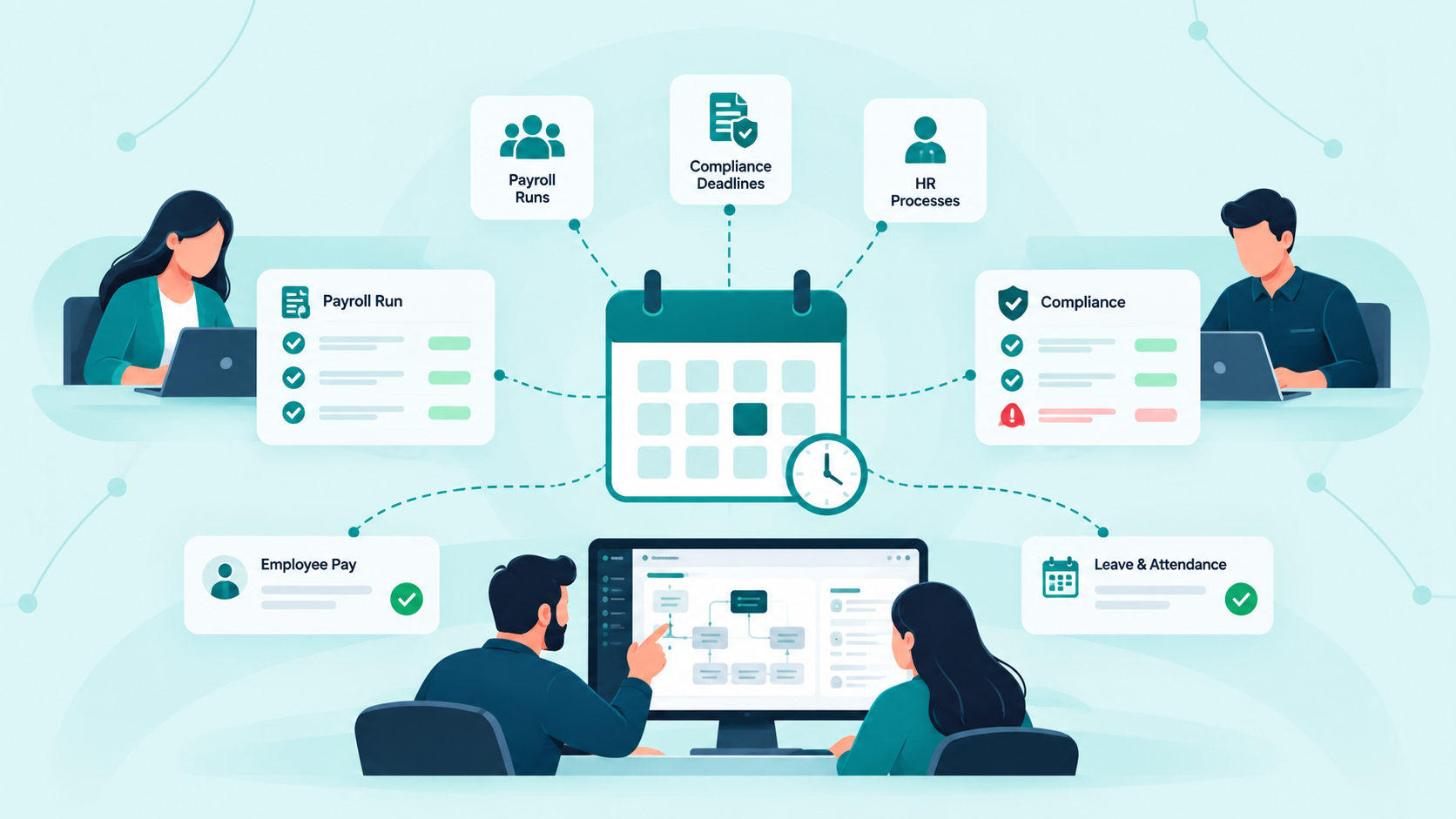
Building software for a company that runs payroll, compliance and HR for other businesses changes how an engineering team thinks about deadlines and edge cases.
Deadlines that don’t move
A payroll run happens on a date fixed by law and by people’s expectations, whether or not a sprint finished on time. That is a different kind of deadline from a product launch that can slip a week with an apology. It teaches a team to build around the calendar rather than hoping the calendar bends around the build.
In practice this means planning backwards from statutory and payment dates, and treating a feature that touches a close process as higher-risk by default, whatever its size looks like on a ticket.
The edge case is someone’s paycheck
In most software, an unusual case that slips through is a bug report and an inconvenience. In payroll and workforce systems, the unusual case is often a specific person’s pay, leave balance or compliance status. That reframes how a team should prioritise: the boring, common path has to be the one that never breaks, before any attention goes to polish elsewhere.
It also means talking to the people who currently run these processes by hand before designing the system meant to replace their spreadsheet. They know the exceptions that never make it into a requirements document.
“In most software, an edge case is a bug report. In payroll, an edge case is someone’s rent.”